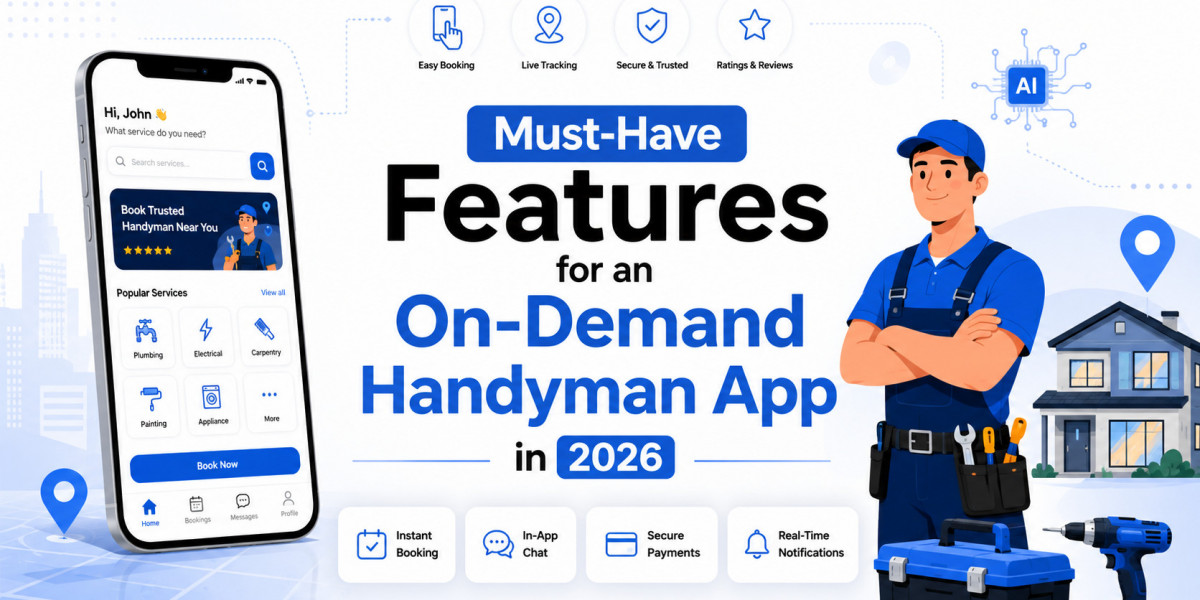

Home service businesses are changing rapidly as more customers prefer booking repairs and maintenance services through mobile apps instead of traditional phone calls or offline methods. Whether it is plumbing, electrical work, appliance repair, or home cleaning, users now expect faster bookings, transparent pricing, secure payments, and real-time service updates. This shift has increased the demand for smarter on demand handyman app solutions that can simplify both customer experience and business operations.
At the same time, businesses are adopting digital tools to manage bookings, automate scheduling, improve communication, and handle multiple services from a single platform. Features like AI-powered recommendations, GPS tracking, smart notifications, and seamless payments are becoming standard in every modern on demand home services app. As the market continues to grow, many startups are also exploring scalable all in one handyman app and white label handyman app solutions to launch services more efficiently and meet evolving customer expectations
Challenges in Traditional Handyman Service Businesses
Lack of Real-Time Communication
Traditional handyman businesses often rely on manual coordination, which leads to delayed responses and poor communication between customers and service providers.
Difficulty Finding Verified Professionals
Customers frequently struggle to identify trustworthy professionals for home services. Without verification systems, trust becomes a major issue.
Scheduling and Availability Problems
Manual scheduling creates booking conflicts, missed appointments, and operational inefficiencies for both customers and businesses.
Limited Business Scalability
Without digital automation, expanding a handyman service business becomes difficult due to operational limitations and inefficient workflows.
Market Trends and Statistics in 2026
Lack of Real-Time Communication
Many traditional handyman businesses still depend on phone calls and manual coordination to manage bookings and customer requests. This often leads to delayed responses, missed updates, and confusion between customers and service providers. Without real-time communication tools, businesses struggle to provide a smooth and reliable customer experience.
Difficulty Finding Verified Professionals
Customers usually want trusted and experienced professionals for home services, but finding reliable providers can be difficult through traditional methods. The absence of proper verification systems, ratings, and reviews often creates trust issues. This is one of the biggest reasons why users now prefer digital handyman platforms with verified service providers.
Scheduling and Availability Problems
Manual scheduling systems can create several operational challenges for handyman businesses. Double bookings, delayed appointments, and poor time management often affect customer satisfaction. Modern on demand home services app solutions solve these issues with smart scheduling and automated booking management.
Limited Business Scalability
Growing a handyman business without digital tools can become complicated and time-consuming. Managing multiple bookings, service providers, and customer requests manually limits business expansion. With automation and centralized management systems, businesses can scale services more efficiently across different locations.
Growth of Hyperlocal Service Apps
The demand for hyperlocal service apps is increasing rapidly as customers continue shifting toward mobile-first booking experiences. People now prefer apps that allow them to book nearby services quickly without lengthy offline processes. This trend is creating strong growth opportunities for businesses investing in on demand handyman app solutions.
Rising Demand for AI Automation
AI-powered automation is becoming an important part of modern handyman marketplace platforms. Businesses are using AI tools to automate scheduling, customer support, booking recommendations, and service management. These technologies help reduce manual work while improving overall operational efficiency and customer experience.
Expansion of the Gig Economy
The gig economy is growing steadily, with more professionals choosing flexible work opportunities through digital platforms. Many independent plumbers, electricians, cleaners, and repair specialists are joining handyman apps to reach more customers and increase earnings. This shift is helping multi-service booking apps grow much faster in 2026.
Mobile-First Consumer Behavior
Modern customers expect everything to be accessible through smartphones, including home services. Users now prefer instant bookings, live tracking, digital payments, and quick support directly from mobile apps. Businesses that fail to provide a seamless mobile experience may struggle to compete in the growing digital services market.
Benefits of an On-Demand Handyman App
Convenience for Customers
An on demand handyman app makes the entire booking process simple and hassle-free for customers. Users can search for services, compare providers, schedule appointments, make secure payments, and track service professionals from one platform. This level of convenience is one of the main reasons behind the growing popularity of home service marketplace apps.
Better Opportunities for Service Providers
Digital handyman platforms create consistent earning opportunities for service providers by connecting them with a larger customer base. Professionals can manage schedules, receive booking notifications, and communicate with customers more efficiently. This improves productivity while helping providers build long-term customer relationships.
Scalability for Business Owners
Business owners can manage operations more effectively with automation tools and centralized dashboards. Features like provider management, analytics, smart scheduling, and payment tracking simplify daily operations. This allows businesses to expand into new locations without facing major operational challenges.
Improved Revenue Generation
Modern handyman apps offer multiple ways for businesses to increase revenue beyond standard service bookings. Features like subscription plans, featured listings, surge pricing, and service package upselling help improve profitability. Businesses can also create recurring revenue streams through membership-based models.
Must-Have Features of an On-Demand Handyman App in 2026
AI-Powered Smart Booking System
AI-powered booking systems help users find the right services quickly based on their preferences, location, previous bookings, and availability. Instead of manually searching through multiple providers, customers receive smart recommendations that save time and improve convenience. For businesses, AI automation also helps manage bookings more efficiently while reducing scheduling errors and delays.
Real-Time Service Tracking
Real-time tracking allows customers to monitor the exact location and arrival time of service providers directly from the app. Similar to ride-sharing platforms, this feature improves transparency and builds customer trust throughout the service process. It also helps businesses manage operations more effectively by reducing delays and improving service coordination.
Multi-Service Integration
A modern all in one handyman app should support multiple home services within a single platform. Customers prefer using one app for plumbing, cleaning, electrical repairs, appliance maintenance, pest control, and other household services instead of switching between different applications. Multi-service integration improves user engagement while helping businesses increase revenue opportunities.
In-App Wallet and Multiple Payment Gateways
Flexible payment systems are essential for providing a smooth customer experience in any on demand home services app. Users expect multiple payment options such as debit cards, credit cards, UPI, digital wallets, and contactless payments. Secure and fast transactions improve user trust while helping businesses handle payments more efficiently across different regions.
Advanced Search and Smart Filters
Smart search and filtering options make it easier for users to find the right service providers based on ratings, pricing, expertise, availability, and location. Instead of scrolling through long lists, customers can quickly narrow down their choices according to their needs. This improves user experience and increases booking conversion rates for businesses.
Voice Search and AI Chat Support
Voice search and AI chat support make handyman apps more user-friendly and accessible for all types of users. Customers can search for services using voice commands or instantly resolve common queries through AI-powered chatbots. These features improve communication, reduce response times, and help businesses lower customer support workload.
Subscription and Membership Plans
Membership plans help businesses build long-term customer relationships while generating recurring revenue. Customers can subscribe to monthly or yearly plans that include discounted services, free inspections, priority booking, or exclusive offers. This not only improves customer retention but also encourages repeat service bookings.
Push Notifications and Alerts
Push notifications help businesses stay connected with users by providing instant updates about bookings, promotions, payments, and service status. Customers receive reminders for upcoming appointments and real-time alerts related to their bookings. This improves engagement while reducing the chances of missed appointments or communication gaps.
Ratings and Review Management
Ratings and review systems help customers make informed decisions before booking services. Users can check provider reviews, ratings, and customer feedback to choose reliable professionals for their home service needs. Transparent review management also encourages service providers to maintain quality and improve customer satisfaction.
Real-Time Analytics Dashboard
Analytics dashboards provide business owners with valuable insights into bookings, customer behavior, revenue trends, and operational performance. Instead of relying on manual reports, businesses can monitor everything in real time through a centralized dashboard. This helps improve decision-making and supports long-term business growth.
Multi-Language and Multi-Currency Support
Localization features are important for businesses planning to expand into multiple regions or countries. Multi-language support allows users to access the app in their preferred language, while multi-currency support simplifies international transactions. These features improve accessibility and create a better experience for global users.
Admin Panel with Automation Features
A powerful admin dashboard helps businesses manage customers, providers, bookings, payments, and marketing activities from one centralized system. Automation features simplify tasks such as invoice generation, booking management, notifications, and complaint handling. This reduces manual workload while improving operational efficiency.
Service Provider Verification System
Verification systems help build trust between customers and service providers by ensuring that professionals are genuine and qualified. Businesses can verify provider identities, certifications, work experience, and background information before approving them on the platform. This improves platform reliability and customer confidence.
Route Optimization and GPS Tracking
AI-powered route optimization helps service providers reach customer locations faster by identifying the shortest and most efficient travel routes. This reduces fuel costs, saves time, and improves daily productivity for professionals. GPS tracking also allows businesses to monitor service operations more accurately.
Contactless Payments and Digital Invoicing
Contactless payments and digital invoicing simplify the payment process for both customers and businesses. Users can complete transactions securely through the app without handling cash, while digital invoices provide instant payment records and service details. This supports faster transactions and paperless operations.
Loyalty and Referral Programs
Loyalty and referral programs encourage customers to continue using the platform regularly while helping businesses attract new users organically. Customers can earn rewards, discounts, or referral bonuses for repeat bookings and inviting others to use the app. These programs improve customer retention and strengthen long-term engagement.
Integrated Video Consultation Feature
Video consultation features allow customers to explain service issues remotely before booking an appointment. Professionals can assess problems, suggest possible solutions, and estimate service requirements through video calls. This saves time, improves communication, and helps providers prepare more effectively before visiting customer locations.
Smart Scheduling and Calendar Sync
Smart scheduling features help users and service providers manage appointments more efficiently. Calendar synchronization reduces booking conflicts by automatically updating schedules in real time. This improves time management, reduces missed appointments, and creates a smoother booking experience for everyone involved.
Business Model of a Handyman App
Aggregator Model
Businesses connect customers with independent service providers while earning commissions from completed bookings.
Commission-Based Model
The platform earns a percentage from every service transaction processed through the app.
Subscription Model
Premium subscriptions provide users with additional benefits such as discounts and priority booking.
Lead Generation Model
Businesses charge professionals for customer inquiries and lead access.
Franchise Expansion Model
Companies can expand into new cities using localized franchise operations and centralized technology.
Monetization Strategies
Commission from Service Providers
Businesses earn commissions for every successful booking completed through the platform.
Featured Listings and Promotions
Professionals can pay for premium visibility within the app marketplace.
Subscription Membership Plans
Recurring membership fees create stable long-term revenue streams.
Surge Pricing During Peak Hours
Dynamic pricing helps maximize profits during high-demand periods.
In-App Advertisements
Relevant ads and partnerships create additional monetization opportunities.
Service Package Upselling
Bundled service packages help increase average order value and customer convenience.
Technology Stack Behind a Modern Handyman App
Frontend Technologies
Flutter and React Native help create smooth and responsive mobile experiences.
Backend Technologies
Node.js, Laravel, Django, and Python support scalable application development.
Database Solutions
Modern handyman apps use MySQL, MongoDB, and PostgreSQL for secure data management.
Cloud Infrastructure
Cloud platforms improve scalability, storage management, and application performance.
AI and Automation Tools
AI chatbots, predictive analytics, and automation tools improve operational efficiency.
Payment Gateway Integration
Secure payment gateways support fast and reliable digital transactions.
Security and Data Protection
Advanced encryption and authentication systems protect sensitive customer information.
Why Choose a White-Label Handyman App Solution
Faster Market Launch
A white label handyman app helps startups launch quickly without building a platform from scratch.
Cost-Effective Development
Businesses reduce development costs by using ready-made architecture and pre-built features.
Easier Customization
White-label platforms allow businesses to customize branding, features, and services according to their requirements.
Better Scalability
Scalable infrastructure helps businesses expand services across multiple cities and regions.
Faster Business Growth
A Gojek clone handyman app allows entrepreneurs to enter the market quickly with proven business models and modern technology solutions.
Businesses exploring handyman app like Gojek solutions often prefer scalable platforms for faster deployment and easier customization.
Conclusion
The demand for digital home service marketplace app solutions is expected to grow significantly in the coming years. Businesses investing in a feature-rich on demand handyman app can improve customer experience, automate operations, and build scalable revenue streams.
From AI-powered booking systems and smart scheduling to real-time tracking and multi-service integration, modern handyman marketplace platforms are transforming the future of home services. Startups and entrepreneurs that adopt advanced AI home services solution technologies early will gain a strong competitive advantage in the evolving hyperlocal service industry.
FAQs
What is an on demand handyman app?
An on demand handyman app is a mobile platform that connects customers with professionals offering home repair, cleaning, maintenance, and other household services.
How does an AI powered handyman app work?
An AI powered handyman app uses automation, predictive analytics, chatbots, and smart scheduling systems to improve booking efficiency and customer experience.
Why are white label handyman apps popular in 2026?
White label handyman apps reduce development time, lower costs, and provide ready-made features that help businesses launch faster.
How much does it cost to develop a handyman app like Gojek?
Development costs vary depending on app complexity, AI features, customization requirements, and platform scalability.
Which monetization model works best for a handyman app?
Commission-based models combined with subscriptions and featured listings are considered highly profitable for modern handyman marketplace platforms.