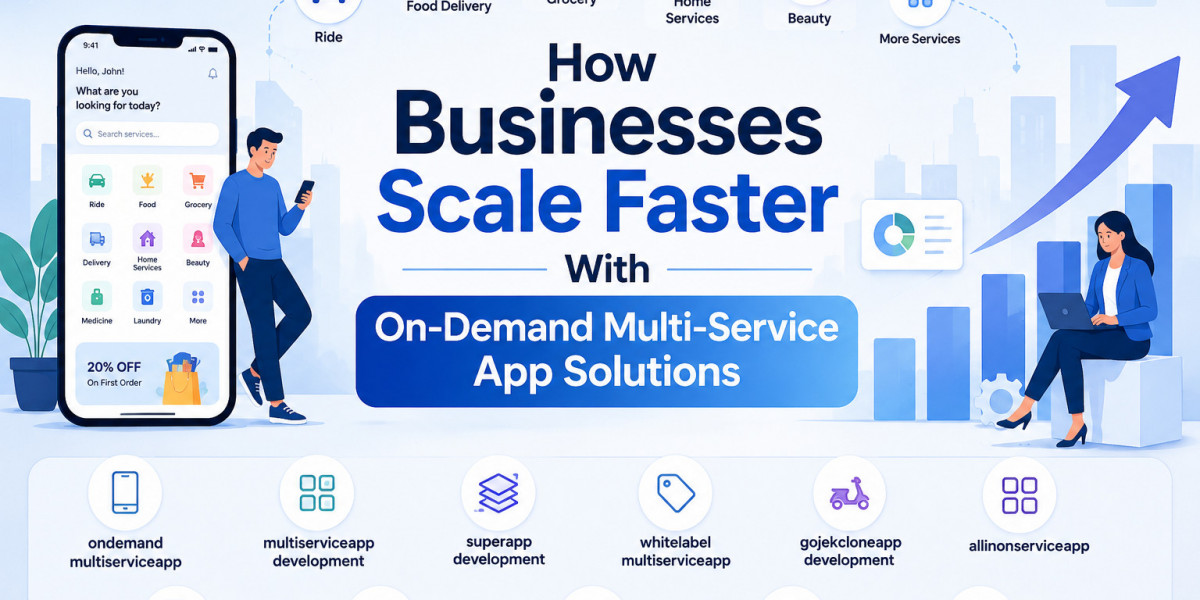

In today's fast-paced digital landscape, businesses are constantly seeking innovative ways to enhance efficiency and cater to the evolving needs of their customers. One powerful solution gaining traction is the on-demand multi-service app, which seamlessly integrates various services into a single platform.
These apps not only streamline operations but also provide a unique opportunity for businesses to scale rapidly by enhancing customer engagement, optimizing resources, and expanding market reach. This article explores how on-demand multi-service app solutions can accelerate growth and transform the way businesses operate in an increasingly competitive environment.
Understanding On-Demand Multi-Service App Solutions
Definition and Overview
On-demand multi-service app solutions are like the Swiss Army knives of the digital age—compact, versatile, and incredibly handy. They grant users access to a variety of services, all wrapped into one seamless app experience. Whether you're hailing a ride, ordering food, or booking a cleaning service, these apps eliminate the need to juggle multiple platforms, making life just a tad easier (and definitely more fun) for users and businesses alike.
Types of Services Offered
The buffet of services available through on-demand multi-service apps is pretty impressive. You can find everything from transportation services, food delivery, and home cleaning to beauty appointments, wellness treatments, and even pet care. Basically, if you can think of it, someone’s probably creating an app to do it. These platforms cater to a wide audience by offering multiple solutions under one digital roof, which is a win-win for consumers looking for convenience and businesses eyeing growth.
Key Benefits of Multi-Service Apps for Businesses
Cost Efficiency and Resource Optimization
Running a business is like juggling flaming swords while riding a unicycle—challenging and risky. On-demand multi-service apps help reduce costs by minimizing the need for separate marketing, customer service, and operational tools for each service. With everything integrated, businesses can streamline their resources and focus on what really matters: making money and maybe enjoying a coffee break (you’ve earned it!).
Enhanced Customer Experience
When customers have everything they need at their fingertips, it’s like being handed a magic wand—poof! Satisfaction guaranteed! Multi-service apps simplify user experiences by providing a single point of entry for various services, making it easier for customers to find what they want. And when their needs are met swiftly, you’ll be at the top of their “go-to” list, even outranking their favorite pizza place.
Increased Market Reach and Accessibility
Taking your business global sounds expensive, right? Not with on-demand multi-service apps! With a well-designed app, you can reach customers in different geographical locations without needing a physical presence everywhere. Accessibility becomes the name of the game, allowing businesses to tap into new markets and demographics. Who knew conquering the world could be done with just a few taps on a screen?
Accelerating Growth: How Multi-Service Apps Enhance Customer Engagement
Personalization and Customer Retention
Personalization is the cherry on top of the sundae that is customer engagement. On-demand multi-service apps analyze user data, enabling businesses to offer tailored recommendations and services. When customers feel understood and valued, they tend to stick around—think of them as loyal dogs, but with less drool. Engaging with users on a personal level keeps them coming back, and that’s the golden ticket to long-term success.
Real-Time Communication and Feedback
In this fast-paced world, waiting days for feedback is so last decade. Multi-service apps facilitate real-time communication between businesses and their customers. Instant messaging and in-app notifications allow for prompt responses and a constant feedback loop, ensuring that businesses stay in tune with customer needs. Think of it as having a direct line to your customers’ minds—scary, yet thrilling!
Streamlining Operations: The Impact of Integrated Services
Centralized Management and Data Analytics
Managing multiple services can feel like herding cats—chaotic and often messy. However, on-demand multi-service apps come with centralized management dashboards that control everything from bookings to customer interactions. Business owners can also dive deep into data analytics, uncovering trends and insights that drive decision-making. It’s like having a crystal ball for your business’ future, minus the weird fortune-teller vibes.
Improved Resource Allocation
Let’s face it: spreading resources too thin is a recipe for disaster. Multi-service apps allow businesses to allocate resources efficiently by streamlining operations. Instead of dividing attention among different platforms, businesses can focus their time and energy on optimizing performance across all services. This leads to better service delivery and happier customers, which, let’s be honest, is what we all strive for.
Case Studies: Successful Businesses Leveraging Multi-Service Apps
Industry-Specific Examples
From food delivery to home services, various industries have embraced multi-service apps to streamline operations and enhance customer experiences. Take Uber, for example: Originally a ride-hailing app, it has morphed into a multi-faceted platform offering everything from food delivery (Uber Eats) to freight shipping. In the healthcare sector, companies like Zocdoc have expanded their offerings to include telehealth services, making it easier for patients to access a variety of healthcare providers through one app. These cases illustrate how a diverse service offering can drive user retention and revenue.
Lessons Learned and Best Practices
Successful businesses leveraging multi-service apps share a few common threads. First, they prioritize user experience; apps should be intuitive, ensuring that customers don’t need a PhD to navigate them. Second, integrating services should feel seamless—users shouldn't need to juggle multiple accounts or log-ins. Lastly, a data-driven approach is key; analyzing user behavior can help businesses tweak services and offerings, ensuring they stay relevant and appealing.
Challenges and Considerations in Implementing Multi-Service Solutions
Technical Hurdles and Integration Issues
Implementing a multi-service app isn’t all rainbows and butterflies. Technical hurdles abound, from ensuring that different services communicate without throwing tech tantrums to maintaining security across various platforms. Integration can be akin to trying to fit a square peg in a round hole—sometimes it just doesn’t work as planned. Businesses must carefully select technologies and partners that can scale with their needs to avoid hitting a wall.
Balancing Complexity and Usability
Another challenge is striking that delicate balance between complexity and usability. While it’s tempting to pack every feature under the sun into your app, doing so can result in overwhelmed users, leading to app abandonment faster than you can say “too many options.” Streamlining features while ensuring they are intuitive is essential—after all, nobody wants to be the user who needs a manual just to order lunch.
Future Trends in On-Demand Multi-Service Applications
Emerging Technologies and Innovations
As we wander into the future, exciting technologies like AI, machine learning, and blockchain are set to reshape multi-service apps. AI can provide personalized customer experiences, predicting what services users want before they even know it themselves (creepy but cool, right?). Meanwhile, blockchain technology promises enhanced security and transparency, ensuring users feel safe sharing their data across multiple services.
Changing Consumer Behavior and Expectations
Consumer behavior is evolving faster than a cat video going viral. Today’s users are looking for convenience, instant gratification, and a touch of personalization. They expect service providers to know them better than their best friends—after all, who doesn’t want an app that just “gets” them? As businesses adapt to these changing expectations, those that prioritize quick responses, streamlined services, and personalized experiences are likely to lead the pack.
Conclusion: The Path to Rapid Business Scaling with Tech Solutions
Recap of Key Points
To wrap it all up in a neat bow, leveraging on-demand multi-service apps can significantly accelerate business scaling. Successful businesses are those that take the plunge into tech, prioritize user experience, and embrace emerging technologies. Just remember to keep things simple and address technical challenges head-on.
Actionable Steps for Businesses
If you’re ready to scale, start by identifying the services that your target audience wants most and integrate them into a cohesive app. Prioritize user experience by conducting frequent testing and gathering feedback. And finally, keep an eye on trends—what’s cool today might be outdated tomorrow. Embrace innovation, and your business will be well on its way to rapid growth!In conclusion, on-demand multi-service app solutions offer businesses a dynamic way to scale operations and meet customer demands efficiently. By leveraging these powerful tools, companies can enhance their service offerings, improve customer satisfaction, and drive growth in a competitive market. As the digital landscape continues to evolve, embracing these innovative solutions will be crucial for businesses looking to thrive and adapt to changing consumer expectations.
Frequently Asked Questions (FAQ)
What is an on-demand multi-service app?
An on-demand multi-service app is a digital platform that integrates various services—such as food delivery, ride-sharing, and home services—into a single application, allowing users to access multiple services conveniently from one location.
How can businesses benefit from using multi-service apps?
Businesses can benefit from multi-service apps by streamlining operations, reducing costs, enhancing customer engagement, and expanding their market reach, ultimately leading to accelerated growth and improved profitability.
What industries can utilize on-demand multi-service apps?
On-demand multi-service apps can be utilized across various industries, including hospitality, transportation, healthcare, and retail, as they cater to diverse customer needs and preferences.
What challenges do businesses face when implementing multi-service app solutions?
Businesses may face challenges such as technical integration issues, ensuring usability and user experience, and managing the complexity of multiple services within a single platform. Careful planning and strategy are essential to overcome these hurdles.