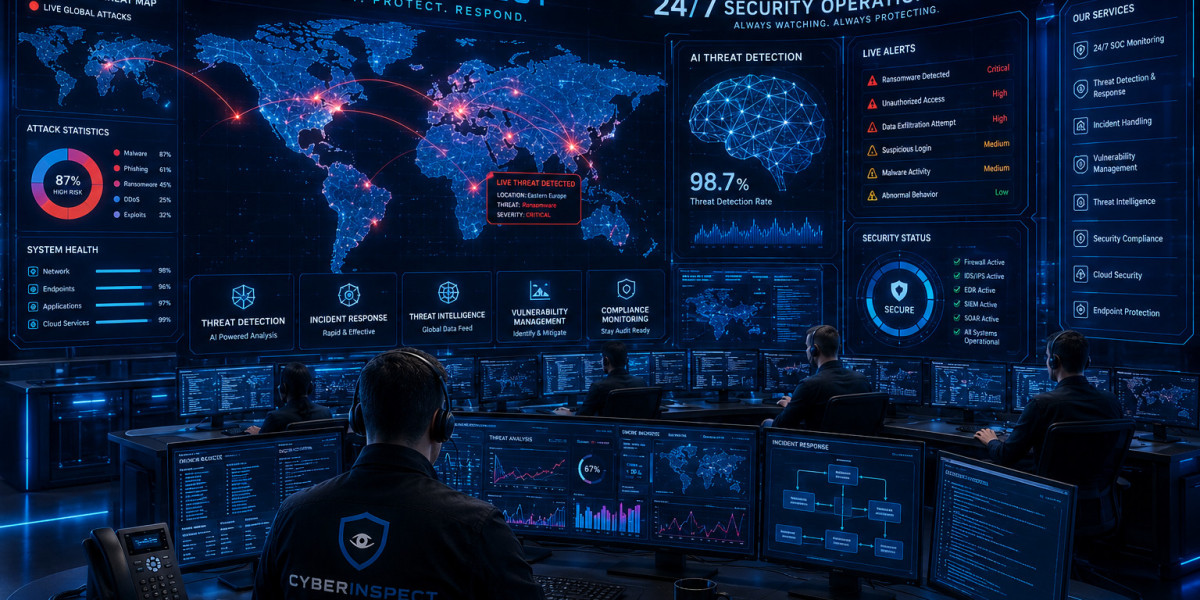

Cybersecurity threats have become one of the biggest challenges for SaaS providers and enterprise organizations. As businesses continue moving operations to the cloud, expanding remote work environments, and handling massive amounts of sensitive customer data, cybercriminals are targeting companies more aggressively than ever before.
From ransomware attacks and phishing campaigns to insider threats and cloud breaches, modern organizations face nonstop cybersecurity risks that traditional security tools alone can no longer handle effectively.
That’s why managed SOC services have become essential for SaaS and enterprise companies. A Security Operations Center (SOC) provides continuous cybersecurity monitoring, advanced threat detection, rapid incident response, and proactive defense strategies that help organizations stay protected 24/7.
In this article, we’ll explore why managed SOC services are critical for modern businesses and how they help SaaS platforms and enterprise organizations strengthen their cybersecurity posture.
What Are Managed SOC Services?
Managed SOC services provide outsourced cybersecurity monitoring and threat management through a dedicated Security Operations Center.
A SOC combines:
Cybersecurity analysts
SIEM platforms
Threat intelligence systems
AI-powered monitoring
Endpoint detection and response (EDR)
Incident response teams
Compliance monitoring tools
Instead of building and managing an expensive in-house SOC, businesses partner with cybersecurity providers like CyberInspect for enterprise-grade protection and 24/7 security operations.
Managed SOC services focus on:
Continuous threat monitoring
Real-time threat detection
Security event analysis
Incident response
Threat hunting
Cloud security monitoring
Vulnerability management
This proactive approach helps organizations prevent attacks before they cause major business disruption.
Why SaaS Companies Need Managed SOC Services
SaaS companies are prime targets for cybercriminals because they manage large volumes of customer data, cloud applications, and online services.
Even a single security breach can lead to:
Customer data exposure
Service downtime
Financial losses
Legal consequences
Compliance penalties
Reputation damage
Managed SOC services help SaaS companies reduce these risks significantly.
1. 24/7 Threat Monitoring for Always-Online Platforms
SaaS platforms operate continuously, which means cyber threats can occur at any time.
Hackers often launch attacks during:
Nights
Weekends
Holidays
Low staffing periods
A managed Security Operations Center provides 24/7 security monitoring to detect suspicious activity immediately.
SOC analysts continuously monitor:
User activity
API traffic
Authentication attempts
Cloud infrastructure
Database access
Endpoint devices
Continuous visibility helps prevent attackers from remaining hidden inside systems for extended periods.
2. Protection Against Advanced Cyber Threats
Modern cyberattacks are increasingly sophisticated and difficult to detect.
SaaS and enterprise organizations face threats such as:
Ransomware
Zero-day exploits
Credential theft
Insider threats
Phishing attacks
API abuse
Cloud misconfigurations
Advanced persistent threats (APTs)
Managed SOC services use:
AI-powered analytics
Threat intelligence feeds
Behavioral monitoring
SIEM platforms
Endpoint detection systems
These technologies help identify malicious behavior patterns before major damage occurs.
3. Faster Incident Response
The speed of incident response directly impacts the severity of a cyberattack.
Without a SOC, organizations may take hours or even days to detect and contain threats.
Managed SOC teams respond immediately by:
Isolating compromised systems
Blocking malicious IP addresses
Disabling compromised accounts
Investigating attack origins
Preventing lateral movement
Containing malware infections
Rapid response reduces:
Downtime
Data loss
Operational disruption
Financial impact
For SaaS businesses, minimizing downtime is critical for maintaining customer trust and service reliability.
4. Cloud Security Monitoring
Most SaaS companies and enterprise organizations rely heavily on cloud infrastructure.
Cloud environments introduce new security challenges, including:
Misconfigured permissions
Unauthorized access
Insecure APIs
Data exposure risks
Multi-cloud complexity
A managed SOC continuously monitors cloud systems for suspicious activity and security vulnerabilities.
SOC analysts help secure:
Public cloud environments
Hybrid infrastructure
SaaS applications
Cloud storage
Virtual machines
Remote access systems
Cloud security monitoring has become essential for modern digital businesses.
5. Compliance and Regulatory Protection
SaaS providers and enterprise companies often handle sensitive customer and financial information.
This creates strict compliance requirements under regulations such as:
GDPR
HIPAA
PCI-DSS
ISO 27001
SOC 2
Managed SOC services help organizations maintain compliance by:
Monitoring security controls
Generating audit logs
Detecting unauthorized access
Providing compliance reporting
Supporting risk management
Strong cybersecurity practices also improve customer confidence and business credibility.
Why Enterprise Companies Need Managed SOC Services
Enterprise organizations face enormous cybersecurity challenges because of their:
Large attack surfaces
Multiple office locations
Remote workforces
Cloud environments
Third-party integrations
Massive amounts of sensitive data
These complex environments require centralized cybersecurity management.
6. Centralized Security Visibility Across Large Infrastructure
Enterprise businesses often use hundreds or thousands of devices and applications.
Without centralized monitoring, security gaps can easily go unnoticed.
Managed SOC services provide visibility across:
Networks
Endpoints
Servers
Applications
Firewalls
Cloud systems
Email platforms
Remote devices
Centralized visibility helps security teams detect coordinated attacks and suspicious patterns across the entire organization.
7. Reduced Cybersecurity Costs
Building an in-house Security Operations Center is extremely expensive.
Organizations must invest in:
Security infrastructure
SIEM platforms
Monitoring software
Threat intelligence systems
Skilled analysts
24/7 staffing
Ongoing cybersecurity training
Managed SOC services provide enterprise-level protection at a significantly lower operational cost.
This makes advanced cybersecurity accessible without massive internal investment.
8. Access to Cybersecurity Experts
Cybersecurity talent shortages continue to affect businesses globally.
Many organizations struggle to recruit experienced:
Threat analysts
Incident responders
Security engineers
Threat intelligence specialists
Managed SOC providers offer access to highly skilled cybersecurity professionals without requiring businesses to build large internal teams.
This improves security effectiveness and operational efficiency.
9. Proactive Threat Hunting
Traditional security systems often rely only on automated alerts.
Managed SOC services go further by using proactive threat hunting techniques.
SOC analysts actively search for:
Hidden malware
Suspicious user behavior
Unauthorized access attempts
Data exfiltration activity
Advanced persistent threats
This proactive defense strategy helps stop attacks before they escalate.
10. Scalability for Business Growth
As SaaS platforms and enterprises grow, their cybersecurity needs become more complex.
Managed SOC services scale easily to support:
New cloud environments
Remote employees
Multiple business locations
Expanding SaaS platforms
Increasing endpoint devices
Scalable security helps organizations grow safely without compromising protection
Industries That Benefit Most from Managed SOC Services
Managed SOC services are valuable across many industries, including:
SaaS companies
Enterprise corporations
Financial institutions
Healthcare organizations
eCommerce platforms
Manufacturing companies
Government agencies
Education providers
Technology firms
Any business handling sensitive customer data or operating online benefits from continuous cybersecurity monitoring.
Why Choose CyberInspect for Managed SOC Services?
CyberInspect provides advanced cybersecurity solutions designed for SaaS companies and enterprise organizations.
Their services include:
24/7 SOC monitoring
Threat detection and response
Cloud security monitoring
Threat intelligence
Incident response
SOC setup and implementation
Managed cybersecurity services
CyberInspect helps businesses strengthen cybersecurity resilience while reducing operational risk.
Final Thoughts
SaaS and enterprise companies face increasingly sophisticated cyber threats that require continuous monitoring and proactive defense strategies. Traditional security tools alone are no longer enough to protect modern digital infrastructure.
Managed SOC services provide organizations with 24/7 visibility, advanced threat detection, expert incident response, and centralized security management.
For businesses handling sensitive data, operating cloud environments, or supporting large user bases, a modern Security Operations Center is no longer optional — it’s essential.
Partnering with CyberInspect gives organizations access to enterprise-grade cybersecurity protection that helps reduce risks, maintain compliance, and support long-term business growth.