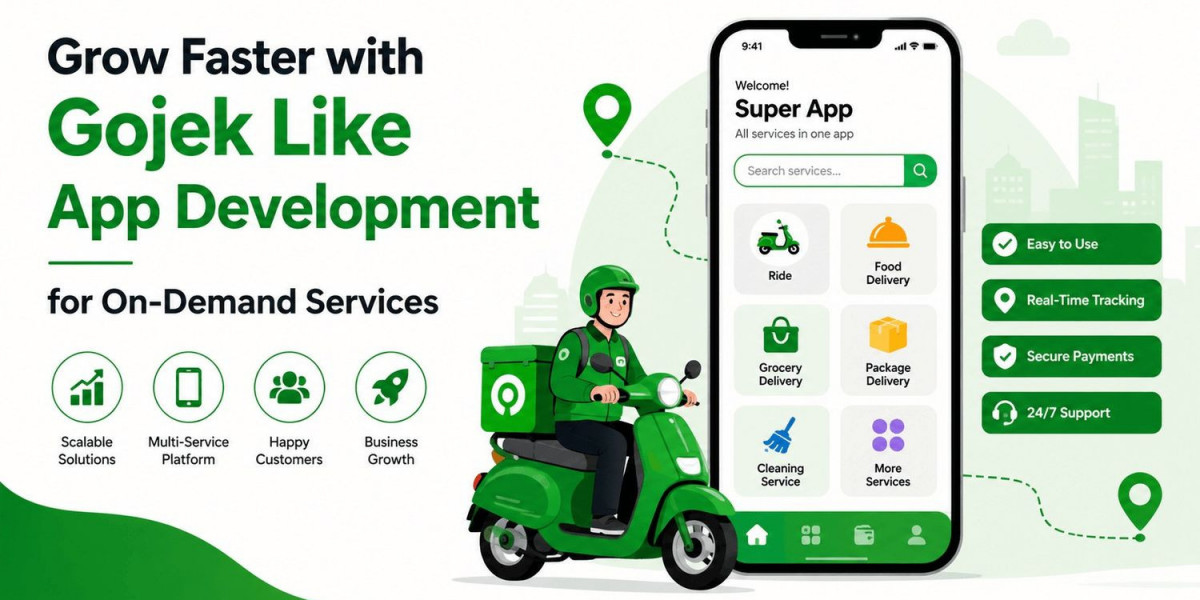

In today's fast-paced world, on-demand services have revolutionized how consumers access products and services, leading to the rapid rise of platforms like Gojek. These applications provide users with the convenience of multiple services at their fingertips, from transportation to food delivery and more. As businesses strive to keep pace with evolving consumer expectations, developing a Gojek-like app can be a game-changer, enabling entrepreneurs to tap into a lucrative market. This article explores the essential components of creating such an app, including key features, technology choices, effective marketing strategies, and monetization models, highlighting how businesses can grow faster in the competitive on-demand landscape.
Understanding the On-Demand Service Landscape
Overview of On-Demand Economy
The on-demand economy is like a genie in a bottle—just rub your smartphone (or click a few buttons) and poof! Services appear at your doorstep quicker than you can say "Where's my pizza?" From ride-sharing to food delivery and home services, this economy is reshaping how we access goods and services, catering to our immediate needs and desires.
Market Trends and Growth Predictions
The on-demand service market is growing faster than a cat video can go viral. With projections indicating it could reach a staggering $335 billion by 2025, the numbers are hard to ignore. Consumers favor convenience over everything, and as mobile technology advances, more businesses are jumping on the bandwagon, hoping to catch a slice of this lucrative pie. Spoiler alert: If you’re not in the game yet, now’s the time to consider it!
Competitive Analysis of Existing Platforms
When it comes to on-demand platforms, you’ve got heavyweights like Uber and DoorDash flexing their muscles. But don’t let that scare you! While they may dominate the market, there’s still plenty of room for newcomers with fresh ideas. A competitive analysis reveals that niche markets—think pet grooming or personal trainers—can thrive amid the giants if you bring your A-game and a sprinkle of creativity.
Key Features of Gojek-Like Apps
User-Friendly Interface
Let’s be honest: if your app looks like a jigsaw puzzle gone wrong, users will vanish faster than the last slice of cake at a party. A user-friendly interface is essential; it should feel like a breeze to navigate, making the booking process as smooth as butter. Think intuitive design, easy access to services, and a layout that doesn’t require a degree in rocket science to figure out.
Real-Time Tracking and Notifications
What’s better than knowing your food is being delivered? Getting a notification every step of the way! Real-time tracking transforms the waiting game into an engaging experience. Users should be able to see their service provider on the map and receive timely updates—because who doesn’t love a little anticipation?
Multiple Service Offerings in One Platform
Why settle for one service when you can have them all? A Gojek-like app shines by offering a buffet of services—from rides to cleaning to food delivery—all under one digital roof. This not only caters to diverse user needs but also encourages higher customer retention. After all, who doesn’t love a one-stop-shop?
Secure Payment Options
Nothing sends users running faster than the fear of insecure transactions. Integrating secure payment options is a must! Whether it’s credit cards, mobile wallets, or good old cash, users should feel safe and confident when making payments, leaving them stress-free and ready to book their next service.
Benefits of Developing an On-Demand App
Enhanced Customer Convenience
Convenience is king! On-demand apps offer users the luxury of getting what they need, when they need it. From ordering groceries to booking a massage, you can provide solutions that fit perfectly into today’s fast-paced lifestyle. When you make your customers’ lives easier, they’ll keep coming back—like that friend who can’t stop borrowing your favorite shirt.
Increased Revenue Streams
The beauty of on-demand services is that they open up multiple revenue streams. By diversifying your offerings, you can tap into new markets and customer segments. With a well-structured app, you’ll have more ways to monetize your services—like offering premium features, subscription models, or partnerships. More streams, more dreams!
Scalability and Flexibility
An on-demand app is not just a static piece of software; it’s a living, breathing entity that can grow alongside your business. Scalability is one of its major perks—whether you want to expand to new locations or add more services, you can adapt and evolve without starting from scratch. Flexibility is the name of the game, allowing you to pivot as market demands shift.
Choosing the Right Technology Stack
Frameworks and Programming Languages
Selecting the right programming languages and frameworks is like choosing the right ingredients for a dish; it can make or break your app. Popular choices like React Native for mobile and Node.js for backend offer a solid foundation. Make sure to pick something that balances performance and ease of use—no one wants a slow-loading app that makes users question their life choices.
Backend vs. Frontend Development
Understanding the difference between backend and frontend is crucial. The frontend is what users see and interact with—like the icing on a cake—while the backend is the hidden engine running the show. Ideally, you want a seamless connection between both, so choosing the right developers for each side is essential for building a robust on-demand app.
Cloud Hosting Solutions
When it comes to hosting, cloud solutions are your best friends. They offer scalability, reliability, and security—everything you need to keep your app running smoothly. Plus, you won’t have to worry about sudden spikes in traffic turning your app into a digital ghost town. With cloud hosting, you can scale resources up or down as needed, ensuring that users can access your services without a hitch.
Steps to Successful App Development
Conducting Market Research
To build an app that doesn’t just exist but thrives, you need to understand the landscape. This means diving deep into the minds of your target audience and analyzing competitors like a hawk. Surveys, focus groups, and good old-fashioned snooping can uncover gaps in the market that your Gojek-like app can fill. So, grab your magnifying glass and get to work—Sherlock would be proud!
Defining App Requirements and Features
Once you have your intel, it's time to outline what your app needs to be a superstar. Think about those essential features that’ll make users go, “Wow, where have you been all my life?” Focus on functionality that enhances user experience, like easy navigation, real-time tracking, and seamless payment options. Remember, features are the fancy icing on the cake, but the cake itself must be delicious!
Prototyping and User Testing
Creating a prototype is like sculpting a masterpiece out of clay—messy, but worth it! Build a minimum viable product (MVP) that showcases your app’s core functionalities. Then, unleash it on a select group of users for testing. Gather feedback like it's candy on Halloween and iterate accordingly. The goal? To refine the app until it’s smoother than a jazz saxophonist on a Sunday morning.
Launch and Post-Launch Strategies
Congratulations, your app has hit the shelves! But don't pop the confetti just yet. A successful launch requires a well-crafted strategy to make sure your app gets the attention it deserves. This includes marketing blitzes, leveraging app store optimization (ASO), and listening to user feedback to make improvements. Keep the momentum going post-launch with updates and engaging content so users stick around like loyal friends.
Marketing Strategies for Your On-Demand App
Building a Strong Brand Identity
Your brand is the face of your app—let’s make it a handsome one! Develop a unique logo, a catchy tagline, and a consistent voice across all platforms. Your branding should reflect your app’s purpose and values while resonating with your target audience. Remember, in the crowded app store, a strong brand identity is like a neon sign at a dark carnival—impossible to ignore!
Utilizing Social Media and Influencer Marketing
In this digital age, social media is your best friend. Create engaging content, run contests, and connect with users like you’re at a virtual coffee shop. Collaborate with influencers who align with your brand to amplify your reach. When an influencer raves about your app, it’s like having a rock star endorse your high school band—instant credibility boost!
Implementing SEO and ASO Techniques
What good is an amazing app if no one can find it? Implement search engine optimization (SEO) for your website and app store optimization (ASO) for your app store listings. Use keywords, engaging descriptions, and eye-grabbing visuals that will make users stop scrolling. Think of it as turning your app into the main attraction of a blockbuster movie—you want everyone to come and see it!
Monetization Models for Gojek-Like Apps
Commission-Based Revenue Models
One of the easiest ways to profit is through a commission-based model. Every time a transaction happens through your app, you take a slice of the pie. It’s a win-win for users and service providers. Just remember to keep your fees reasonable so that your app doesn’t feel like a greedy giant!
Subscription and Membership Options
Consider offering subscription or membership models for premium features or exclusive content. Users pay a regular fee, and in return, they get VIP access to services they love. Think of it as getting the golden ticket to Willy Wonka’s factory—who wouldn’t want that?
In-App Advertising Strategies
In-app advertising can be another profitable avenue—just tread lightly! Integrate ads seamlessly so they don’t disrupt the user experience. Consider partnering with relevant brands that will appeal to your audience. It’s like throwing a party and inviting only the coolest guests—everyone will have a good time, and your wallet will thank you!
Future Trends in On-Demand Services
Integration of AI and Machine Learning
Buckle up, because AI and machine learning are about to take the wheel! These technologies can optimize your service delivery, personalize user experiences, and improve efficiency. Imagine an app that learns user preferences better than your best friend—that's the future, and it's looking bright!
Focus on Sustainability and Eco-Friendly Options
Consumers are becoming more eco-conscious, so why not jump on the green bandwagon? Incorporating sustainable practices or offering eco-friendly options can set your app apart from the rest. It’s not just about servicing needs; it’s about giving back to Mother Earth. Go ahead, hug a tree while you’re at it!
The Rise of Hyperlocal Services
In a world that craves immediacy, hyperlocal services are quickly gaining traction. Tailoring your app's offerings to specific local demands can create a more personalized experience for users. Imagine delivering hot coffee from the café just around the corner instead of a chain store miles away—talk about local love!In conclusion, developing a Gojek-like app presents a unique opportunity for businesses to thrive in the on-demand service market. By understanding the critical features, technology requirements, and effective marketing strategies discussed in this article, entrepreneurs can create a platform that meets consumer demands and drives revenue. As the on-demand economy continues to evolve, staying ahead of trends and adapting to customer needs will be key to ensuring long-term success and growth in this dynamic industry.
Frequently Asked Questions
1. What are the essential features of a Gojek-like app?
The essential features include a user-friendly interface, real-time tracking, multiple service offerings, secure payment options, and customer support functionalities.
2. How much does it cost to develop an on-demand app?
The cost of developing an on-demand app can vary widely based on factors such as complexity, features, and the development team’s location, but it typically ranges from $10,000 to $100,000 or more.
3. How can I market my on-demand app effectively?
Effective marketing strategies include building a strong brand identity, leveraging social media, utilizing influencer partnerships, and implementing SEO and ASO techniques to increase visibility.
4. What monetization models can I use for my Gojek-like app?
Monetization models for such apps can include commission-based revenue, subscription or membership options, and in-app advertising, allowing for multiple streams of income.