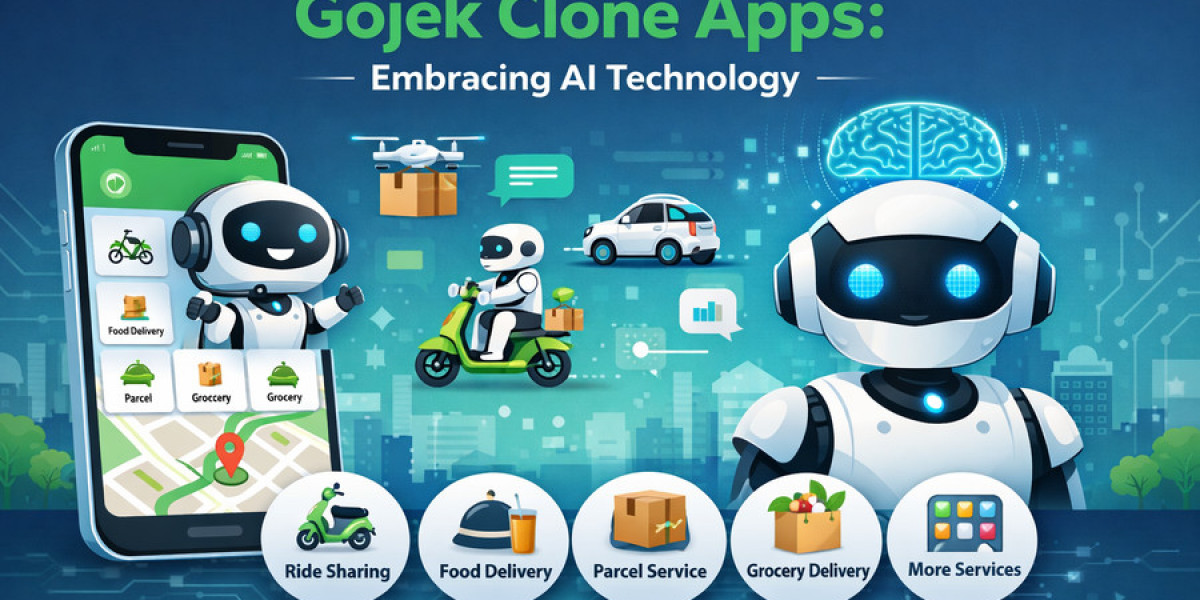

As the digital landscape rapidly evolves, Gojek clone apps are increasingly at the forefront of innovation, offering a wide array of services that cater to the growing demands of consumers. With the integration of artificial intelligence (AI) technologies, these apps are poised to enhance user experience, streamline operations, and adapt to changing market dynamics. This article explores the future of Gojek clone apps through the lens of AI, examining its transformative impact on various aspects of app functionality, operational efficiency, and user engagement. By understanding the potential of AI, stakeholders can better navigate the challenges and opportunities that lie ahead, ensuring their platforms remain competitive and relevant in an ever-changing environment.
Understanding Gojek Clone Apps: A Brief Overview
What are Gojek Clone Apps?
Gojek Clone Apps are multitasking mobile applications designed to offer a range of services under one roof, much like the original Gojek. Think of it as your one-stop shop for everything from ride-hailing to food delivery, logistics, and even payment services. Essentially, if you need something done, these apps aim to handle it all seamlessly, without requiring you to juggle multiple applications like a circus performer.
Key Features and Services Offered
The key features often bundled into Gojek Clone Apps include ride-sharing, food delivery, courier services, and cashless transactions. Some might even throw in beauty services, on-demand home repairs, or, who knows, delivery of your favorite snack at midnight. The beauty of these apps lies in their versatility—many services packed into one, like a Swiss Army knife for modern living!
The Market Landscape and Competition
The market for Gojek Clone Apps is buzzing like a busy café during brunch. With various players entering the scene, competition is fierce. Existing giants and start-ups alike are scrambling to offer better features, prices, and services. It’s a tech race where the fastest app wins—whoever can best meet the needs of the savvy, digital consumer will take the crown. Spoiler: it’s all about innovation and user experience.
The Role of AI in Enhancing User Experience
Personalization Through AI Algorithms
AI algorithms are the wizards behind the curtain, tailoring user experiences like a bespoke suit. They analyze user preferences and behaviors, recommending services or products that feel like they were made just for you. It’s the difference between receiving a generic ride suggestion and getting a ride that knows your favorite playlist is all about 90s nostalgia.
Improving Customer Support with AI Chatbots
AI chatbots are like your friendly neighborhood helpers—available 24/7 to answer questions like “Where’s my ride?” or “What’s for dinner?” These handy bots can handle a multitude of queries simultaneously, minimizing wait times and leaving customers feeling less like they're in a digital black hole and more like they’ve got a helpful assistant on speed dial.
Streamlining User Interfaces with Machine Learning
Machine learning is the secret sauce that enhances user interfaces, simplifying how we interact with these apps. Through smart predictions and adaptive designs, apps can serve up the most relevant choices right at your fingertips. It’s like the app is reading your mind—well, not quite, but close enough to make your life a whole lot easier!
Key AI Technologies Transforming Gojek Clone Apps
Natural Language Processing (NLP)
Natural Language Processing is the technology that helps apps understand and respond to our jumbled human language. With NLP, users can issue commands and ask questions in their own words, making interactions much more intuitive. It’s like having a conversation with your app, where it actually gets what you mean instead of just nodding along politely.
Predictive Analytics for Demand Forecasting
Predictive analytics is the crystal ball of AI technology, analyzing trends and behaviors to forecast demand with impressive accuracy. By knowing when and where users are likely to need services, Gojek Clone Apps can optimize their operations, ensuring that resources are in the right place at the right time. It’s like having a personal assistant who anticipates your needs before you even know you have them.
Computer Vision for Enhanced Security Features
Computer vision technology helps apps recognize and verify users or environments, enhancing security measures. Whether it’s facial recognition for login or monitoring driver behavior for ride safety, computer vision adds a layer of trust that keeps users feeling secure. It’s like having your own digital bouncer, ensuring that only the right people get in and that your experience is as safe as it is enjoyable.
Impact of AI on Operational Efficiency and Cost Reduction
Automation of Routine Tasks
AI automates repetitive tasks, freeing up human workers to focus on more meaningful activities. This means fewer late-night shifts sorting through endless customer inquiries and more time for strategizing the next big feature. With AI handling the mundane, employees can channel their creativity instead of wrestling with monotonous tasks—it's a win-win!
Optimizing Resource Allocation
AI tools help managers allocate resources more effectively, analyzing data to determine where drivers, delivery personnel, or services are needed most. By optimizing resource use, apps can run smoother and more efficiently, like a well-oiled machine, reducing unnecessary costs while boosting customer satisfaction. After all, no one likes waiting for a ride that’s stuck in traffic because someone forgot to send a driver!
Reducing Human Error with AI Systems
AI systems have a knack for minimizing human errors—because, let’s face it, we’re all prone to the occasional slip-up. By implementing AI in critical processes, Gojek Clone Apps can ensure a higher level of accuracy and reliability. It’s like having an extra set of eyes to catch those pesky mistakes before they cause chaos, ensuring that users enjoy a seamless and hassle-free experience.
Future Trends in Gojek Clone Apps Driven by AI
Increased AI Integration Across Services
As Gojek clone apps continue to evolve, AI integration will become more prevalent across a variety of services. Expect to see chatbots handling customer queries 24/7, personalized recommendations based on user behavior, and more efficient routing for delivery services. This will not only enhance user experience but also help companies streamline their operations, making everything run smoother than a freshly waxed surfboard.
Emerging Technologies to Watch
Watch out for technologies like machine learning, natural language processing, and computer vision making waves in the Gojek clone app landscape. Machine learning algorithms will analyze user data to anticipate needs, while natural language processing will improve communication between users and the app. And let’s not forget about computer vision, which might just lead to the rise of apps that can visually identify locations or items with a snap of a camera—because who doesn’t want to point and click their way to faster service?
Shift Towards Hyperlocal Services
The trend of hyperlocal services is set to redefine the Gojek clone model. With AI powering algorithms that can detect what users need based on their location in real-time, businesses will be able to cater more specifically to user demands. Need a latte delivered in 10 minutes? Done. Want to book a yoga class around the corner? Easy-peasy. It's all about enhancing convenience and making users feel like their app knows them better than their own mirror.
Challenges and Considerations in Implementing AI
Data Privacy and Security Concerns
With great power comes great responsibility, and the same goes for AI. As apps collect more personal data to fuel their AI engines, concerns over data privacy and security will grow like weeds in a garden. Companies will need to balance the benefits of personalization with robust security measures, ensuring that their users feel safe while they enjoy an enhanced experience. Because no one wants their latte order to be exposed to the world—talk about a coffee catastrophe.
Cost Implications of AI Implementation
Implementing AI technology isn't just a plug-and-play situation; it often comes with a hefty price tag. From hiring skilled developers to investing in the right infrastructure, companies must weigh the costs against the potential benefits. While AI can save money in the long run, initial investments can feel like putting down a deposit for a fancy car—great future ride, but that upfront cash can sting a little.
Skills Gap and Workforce Adaptation
As AI takes the front seat, the workforce must evolve too. The current talent pool might not be equipped with the necessary skills to manage sophisticated AI tools, requiring businesses to either train their existing staff or look for new hires. This shift could lead to a workforce teetering on the edge of adaptation, as employees scramble to keep up with the fast pace of technological advancement. It's like trying to learn the tango while doing the cha-cha—trickier than it sounds!
Case Studies: Successful AI Integration in Gojek Clone Apps
Enhanced User Engagement through AI
Company A decided to turbocharge their user engagement by integrating AI-driven chatbots that learned from customer interactions. By providing instant responses and personalized suggestions, they saw a significant uptick in customer satisfaction and retention. It turns out, having an AI buddy to chat with can make all the difference—like having a friend who always remembers your favorite pizza topping.
Cost Savings via AI-Driven Operations
Company B implemented AI to optimize their delivery routes, leading to dramatic cost savings and increased efficiency. By predicting traffic patterns and automatically adjusting routes, they not only saved on fuel but also managed to deliver orders faster than a cat chasing a laser pointer. Their bottom line was happier, and so were their customers—a win-win situation!
Overcoming Challenges with AI Solutions
After some initial hiccups, Company C embraced AI to tackle their operational challenges head-on. By using predictive analytics to manage inventory and ensure that drivers were available when needed, they were able to turn their challenges into opportunities. Instead of sinking, they swam smoothly through the waters of AI integration, proving that persistence pays off—just like that occasional gym visit you promised yourself!
Conclusion: The Path Forward for Gojek Clone Apps
Summary of Key Insights
The landscape for Gojek clone apps illuminated by AI technology holds immense promise, but it does not come without its hurdles. Increased integration, emerging tech, and a focus on hyperlocal services will reshape the game, all while companies must navigate data privacy, cost implications, and workforce changes. Just think of it like crossing a tightrope—one misstep, and you might end up in the safety net below!
The Importance of Continuous Innovation
To stay competitive, Gojek clone apps must commit to continuous innovation. By continually refining their AI applications and exploring new technologies, they can adapt to ever-changing user needs and market demands. It’s like being a stand-up comedian: you can’t just tell the same jokes every night—keeping your material fresh is the key to winning over the crowd.
Final Thoughts on the Role of AI in the Future
In conclusion, AI is not just a buzzword; it's a game-changer for Gojek clone apps looking to thrive in the future. As technology continues to progress, embracing AI will be crucial for enhancing user experiences, improving operational efficiency, and ultimately shaping the next generation of on-demand services. So, buckle up—because the future is going to be one heck of a ride!In conclusion, the future of Gojek clone apps is intricately linked to the advancements in artificial intelligence technology. As these apps continue to evolve, embracing AI will be crucial for enhancing user experiences, optimizing operations, and staying ahead of the competition. By addressing the challenges associated with AI integration and leveraging its potential, businesses can position themselves for success in a dynamic marketplace. The journey towards AI-driven innovation is just beginning, and those who adapt will undoubtedly thrive in this exciting new era.
Frequently Asked Questions (FAQs)
1. What are Gojek clone apps?
Gojek clone apps are multi-service platforms that replicate the functionalities of the original Gojek app, offering services such as ride-hailing, food delivery, and payment solutions all in one integrated application.
2. How does AI enhance Gojek clone apps?
AI enhances Gojek clone apps by enabling personalized user experiences, automating customer support through chatbots, optimizing operational efficiency, and providing predictive analytics for better service management.
3. What are some challenges in implementing AI in Gojek clone apps?
Challenges include data privacy and security concerns, the cost of AI technology implementation, and the need for skilled personnel to manage and maintain AI systems effectively.
4. What future trends can we expect for Gojek clone apps?
Future trends may include increased AI integration across services, the rise of hyperlocal service offerings, and the adoption of emerging technologies like blockchain and advanced data analytics to enhance app functionalities and user engagement.