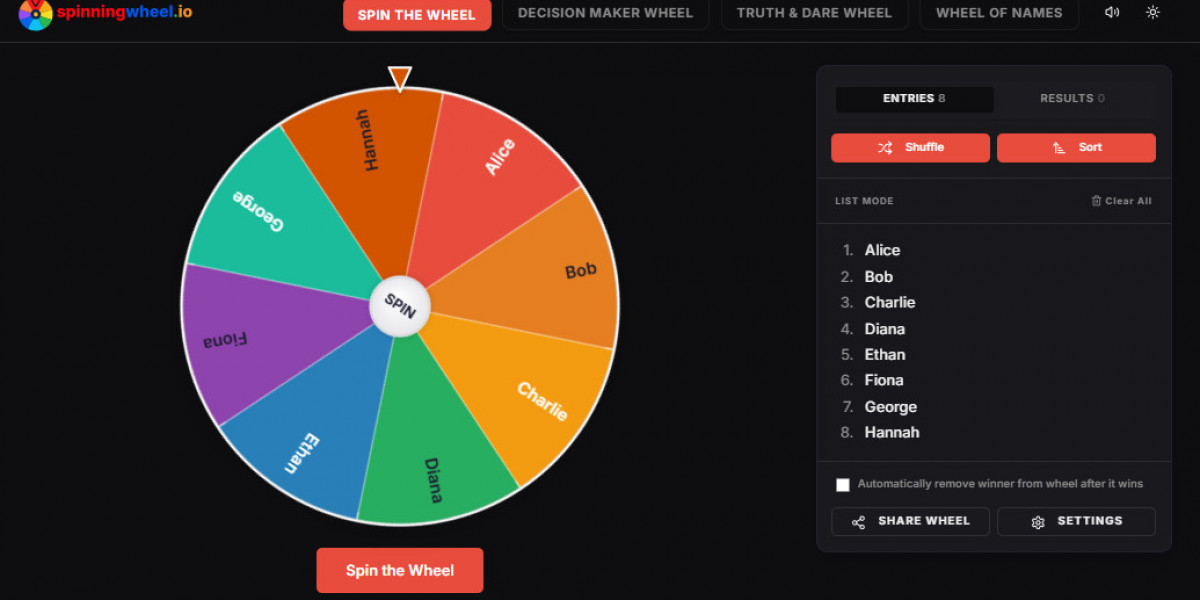

The wheel of names has become a popular tool for adding excitement, fairness, and unpredictability to everyday decision-making. Its simple concept—spinning a wheel to select a name—transforms an ordinary task into an engaging activity. Whether used in classrooms, workplaces, social events, or online platforms, the wheel of names combines entertainment and functionality in a way that appeals to people of all ages.
At its heart, the wheel of names is designed to create a fair and random selection. Unlike methods such as drawing names from a hat or picking volunteers, the wheel ensures that every participant has an equal chance. This impartiality is particularly useful in settings where fairness is crucial. For instance, teachers can use it to call on students randomly, ensuring everyone has an opportunity to participate. Similarly, workplaces can use it to assign tasks or decide the order of presentations in a way that removes any bias.
One of the most compelling aspects of the wheel of names is the anticipation it generates. As the wheel spins, viewers are drawn into the suspense, watching intently as the pointer passes over different names. The gradual slowdown of the wheel builds excitement, making the final selection feel rewarding, even if it is part of a routine task. This element of unpredictability creates a small thrill for participants and observers alike.
In classrooms, the wheel of names is especially effective as an engagement tool. Teachers can use it to randomly select students for answers, discussions, or classroom responsibilities. The visual and interactive aspect of the wheel makes students more attentive, encourages participation, and reduces the perception of favoritism. Additionally, it can be used to assign group projects or rotate responsibilities in a fun and organized manner, adding structure without losing the sense of play.
The wheel of names is equally beneficial in workplace settings. Managers can use it to assign tasks, select team members for specific projects, or determine the order of speakers during meetings. By introducing randomness, the tool ensures fairness and keeps everyone on an equal footing. Beyond fairness, the wheel adds a playful and engaging dimension to office activities. It can transform mundane tasks into interactive experiences, increasing morale and participation among team members.
Events and gatherings also benefit from the wheel of names. Whether for prize draws, raffles, or interactive games, spinning the wheel adds visual excitement and a sense of anticipation. Unlike traditional selection methods, the spinning motion captures attention and keeps participants involved until the final result is revealed. The wheel can be themed to match specific occasions, such as birthdays, corporate events, or holiday celebrations, enhancing the overall experience.
Digital technology has expanded the versatility of the wheel of names. Online versions allow users to customize names, colors, themes, and even sound effects. Digital wheels offer the convenience of instant setup, easy adjustments, and the ability to save configurations for future use. They are ideal for virtual classrooms, online meetings, and remote events, making them accessible to anyone with an internet connection. The interactive nature of digital wheels maintains engagement even in virtual settings where traditional interaction may be limited.
The appeal of the wheel of names is not limited to fairness and engagement; it also simplifies decision-making. When multiple people or tasks are involved, deciding fairly can sometimes be time-consuming or contentious. The wheel of names removes uncertainty by providing a clear, random outcome in seconds. This efficiency makes it a valuable tool in fast-paced environments, reducing delays and avoiding potential conflicts.
Moreover, the wheel of names encourages creativity. Customizable segments can represent challenges, prizes, or different activities, making it a versatile tool for games, learning, or team-building exercises. The ability to personalize the wheel according to the audience or event keeps the experience fresh and engaging, whether it is used daily in a classroom or occasionally at a social gathering.
Psychologically, the anticipation and suspense created by the wheel of names make it inherently enjoyable. Watching the wheel spin taps into the human love for uncertainty and reward. Even when the stakes are low, the thrill of watching the pointer land on a particular name keeps participants invested. This sense of excitement turns simple selections into memorable moments.
The wheel of names is more than just a selection tool; it is a way to make everyday decisions interactive, fair, and entertaining. Its combination of accessibility, adaptability, and visual engagement ensures that it remains relevant across a variety of settings. From educational environments to corporate spaces, from live events to online platforms, it transforms ordinary tasks into experiences that people look forward to.
In conclusion, the wheel of names is a practical and enjoyable way to introduce randomness, fairness, and excitement into any selection process. By turning a simple action into an interactive and suspenseful experience, it engages participants, maintains transparency, and encourages involvement. Whether for learning, work, entertainment, or special events, the wheel of names proves that even the simplest tools can create meaningful and memorable experiences. It is a testament to how a creative approach to decision-making can make routine activities more dynamic, fair, and fun.